All-American Flashback: Kayla Braud (2010-13)
1/28/2016 12:00:00 AM | Softball
In honor of Alabama softball's 20th anniversary, rolltide.com will be catching up with our 20 former All-Americans in a series of feature interviews. Our 15th feature is with three-time All-American Kayla Braud (2010-13), who broke Kelly Kretschman's career batting average record at Alabama.
Kayla Braud is Alabama's first and only player from the state of Oregon, moving to the opposite corner of the country to become one of the most prolific hitters in Crimson Tide history. Growing up as a college football fan provided her an early window to the tradition and passion of the Southeastern Conference, though the allure of Pac 12 softball was unavoidable.
"I loved college football growing up," Braud said. "I knew how good the SEC was for football but not necessarily in softball. They were good then but not nearly as good as they are now, so it was all about the Pac 12 for me growing up."
A prolific prep career earned Braud plenty of praise from around the country. She was named the Oregon 4A Player of the Year as a junior and senior at Marist High School and ended her high school career on a 103-game hitting streak, a national record that earned her the top spot on ESPN RISE's record-breaker list.
"I took a few visits and Alabama was really the best one I took," Braud said. "I remember getting letters from Alabama in the mail and thinking it was really cool and a very big deal. When I flew to visit, I saw the campus, the facilities and how much pride everyone has in the university. That is where Alabama trumps the other schools. It has an atmosphere about it that is very special. That's when I started taking great interest in the school.
"You can tell right away when you talk with Patrick Murphy, Alyson Habetz and the team that they're a family. They're genuine, which is really rare when you go on visits. A lot of different coaches and players are trying to sell you because they want you to go to their school. With Alabama, it was all real. It was a genuine family and you could feel it right away. They're excited and happy to show you around and you really believe in what they're saying."
Like fellow Tide All-American Brittany Rogers before her, Braud used the slap game and her dangerous speed to frustrate opposing pitchers and defenses. A natural righty, Braud learned to hit from the left side from a young age and never looked back.
"When I was nine years old, I went to my dad and told him I wanted to hit lefty," Braud said. "My older cousin was a lefty slapper and she was really good at it. My dad said we could try it and see how it goes. From that moment on, I never went back to the right side. I bought in and wanted to be a speedy player who got on base and I loved the finesse part of it. The slap game wasn't as prevalent on the west coast. It wasn't really rare, but it was definitely something that blossomed on the east coast. I knew I had some speed and I wanted to give myself the best advantage possible. It was a no-brainer"
Arriving as a freshman prior to the 2010 season, the tone and expectations were set immediately by the team's veterans.
"The message was not to wait," Braud said. "Four years is a very short amount of time, so why wait until your junior year to give it your all and be great? That was instilled in me as a freshman. Why be intimidated by other teams in the SEC or upperclassmen? It was about being your absolute best, giving everything you have for the team and laying it all out on the line right away. There was no time to get comfortable. You're throw in the fire and from there you just have to run with it."
Braud wasted no time making a name for herself as a freshman, finishing the 2010 season with a program-record .505 batting average, beating Kelly Kretschman's previous single-season record of .467 which had stood since 1998. Her 95 hits and 45 stolen bases that season both ranked fourth in program history.
The one stain on her otherwise stellar stat line as a freshman was her fielding percentage, where she committed a team-leading 13 errors at second base. Needing to keep her bat in the lineup, Braud was moved into the outfield despite never playing a game there her entire life. Alyson Habetz, who had previously guided All-American Ashley Courtney in a similar position move, would do so again with Braud.
"Coach Aly was the biggest factor in my success in the outfield," Braud said. "She took me under her wing and taught me everything she possibly could in a short amount of time. The reason the Alabama outfield is so good is because of her. She takes pride in the outfield and not a lot of people do that. We took pride in our position. It was a huge change of pace going from the infield to the outfield. I had never played there before. I played shortstop from the time I was seven years old to when I was 18 so it was a huge change. Aly is a rockstar as a coach in the outfield because she made it very doable. I was intimidated at first but she gave me the confidence and the knowledge to get it done."
Braud adjusted well with her move to the outfield, earning First Team All-America honors as a sophomore while hitting .436 with 89 hits and a career-high 58 stolen bases. The year ended with another trip to the Women's College World Series and two wins in Oklahoma City, but the team again fell short of their ultimate goal of a national championship. Seven trips to the World Series had seen Alabama grow into a regular contender, but another fruitless effort led many to question when, if ever, Alabama or another SEC team would finally break through.
The 2012 season proved to be that year for the Tide, and Braud had a fortuitous feeling as early as preseason training.
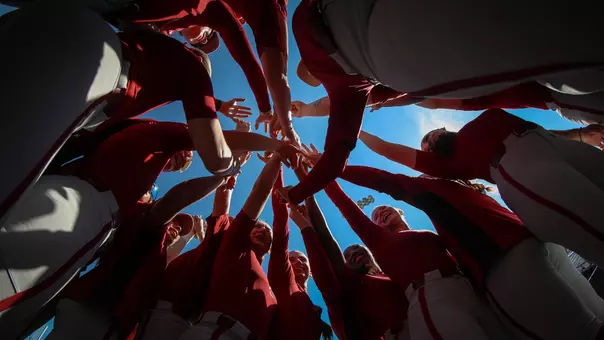
"I think the biggest difference was that we had great consistent leadership at the top," Braud said. "You could tell it from the beginning even in the fall during weightlifting and preseason workouts. They were always on the same page and that trickled down to the rest of the team. We really felt like we were on the same page, we had the same drive and we were a little bit more motivated than I had ever remembered. We had the right team. Everything that year lined up the way it was supposed to. We had to go through some adversity but we had a lot of high points too and that created a perfect season. It started with our senior class and trickled down to everybody. We had the best team chemistry that season."
The season culminated in one of the most memorable championship series in NCAA softball history. After falling 4-1 in game one, Alabama bounced back with an 8-6 victory in game two to set up a winner-take-all game three. Rain forced a three-hour delay to the start of the game and another delay just a few innings later. When the teams retook the field in the fourth inning, Alabama overcame a 3-0 deficit with four runs in the fourth and an insurance run in the fifth to lead, 5-3. A two-out solo homer by freshman Lauren Chamberlain in the top of the seventh drew the Sooners within one run, as national player of the year Keilani Ricketts came to the plate. Jaclyn Traina struck Ricketts out looking, giving Alabama its first national title and the first for any SEC school.
"It's funny, because when I look back, I don't remember the game much," Braud said. "I know that sounds crazy, but what I really remember is what it felt like to walk up to that stadium with my teammates feeling so prideful to represent the University of Alabama. I remember on the bus how we reacted to the loss in game one. It was a hungry feeling that we couldn't wait to play again. I remember how we bounced back the next game. I remember the pregame talks and obviously during the rain delay dancing outside of the dugout. It would have been one of the greatest memories of my life whether we won or lost. I was surrounded by my best friends and I was happy that I wasn't the team sitting in the dugout pouting."
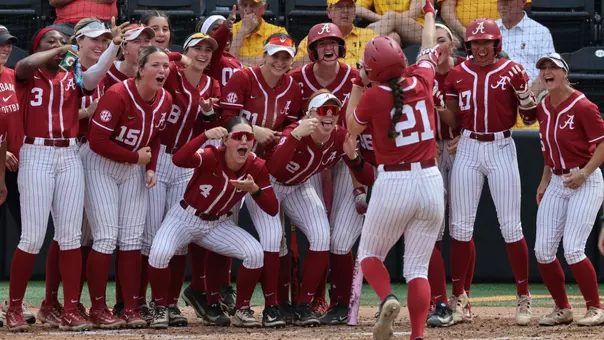
During the mid-game rain delay in Oklahoma City, Braud and her teammates decided to alleviate the boredom and head outside the dugout to energize themselves and the Alabama crowd. The television cameras naturally followed and the contrast between cheering Alabama players in a rainstorm against a sullen Oklahoma team sitting in the dugout was, in the overall narrative of the game, seen as a spark towards Alabama's comeback and eventual win. The fun atmosphere displayed even in the tensest moment of the season epitomized the off-the-field experience for Braud at Alabama.
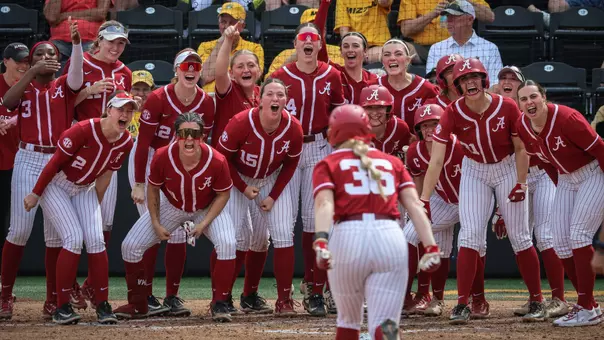
"We were goofy all the time," Braud said. "We did music videos, made up dugout cheers and did the 'beats by bama' in the dugout. We enjoyed every single second we had together. Softball was a great platform for that but it wasn't the end-all, be-all. It was just a way to develop relationships and build bonds. That's one of the greatest things I'll ever take from my four years. Don't get me wrong, I am more than happy that we won a national championship, but it's the people and the memories that make it all worth it."
The music videos, still available on her YouTube channel, became a regular tradition during Braud's time at Alabama.
"I was definitely one of the bigger hands in that, being the person that put them on my computer, edited them and put them on YouTube," Braud said with a laugh. "I definitely had a part but it was a collective thing. It was a popular thing to do. I don't remember what baseball team did it but they did a video for 'Call Me Maybe' and it was kind of a natural progression from there. It was a way to eat up time on the bus, then it became a way to eat up time at the hotel and then it became way bigger than that since we ended up making a few. It was something we looked forward to and it helped people take their minds off the game. When you play a 60-game season, it gets grueling, so it's nice to have something you can do to relax and take your mind off the game for a little bit."
While Braud and the team managed to have fun, academics was also a very serious point of pride off the field. Braud earned First Team Academic All-American honors three times at Alabama, becoming the first player to earn First Team honors as both an All-American and Academic All-American in the same season. She accomplished the feat twice (2011, 2013) and has since been matched by current Tide outfielder Haylie McCleney, who did so in 2014 and 2015.
"Softball isn't the end-all, be-all," Braud said. "We don't have a very expansive professional option so you realize that college is sort of the top tier for softball. When you have no thought of something like the NFL after college, you have to make sure that you take advantage of your school and earn a diploma that will allow you to advance in your career. That was something that Coach Murphy always talked about. Softball was a way to get you in college but what you do in the classroom will help you the rest of your life. I took advantage of that when I was there. It was tough to balance but having softball almost made school easier in a sense. You had something to work for. I knew I had to stay eligible. I knew I had to have my work done by a certain time because I had weights at 5:30 the next morning. It kept me accountable. You get out of it what you put into it, and I came away with a degree and confidence heading into the workforce."
Less than three years removed from graduating, the lessons learned at Alabama are still fresh in Braud's mind.
"It's been almost three years since I left and I still think about the lessons every single day," Braud said. "There's not a day that goes by when I don't think of something Coach Murphy or Coach Aly said or something [strength and conditioning coach] Michelle Diltz said in the weight room or something my teammates said. Coach Murphy always said the sooner you realize it's not all about you, the better you'll be and I take pride in that. I always put others first. Characteristics like servant leadership apply on the softball field but they also apply to the rest of your life."
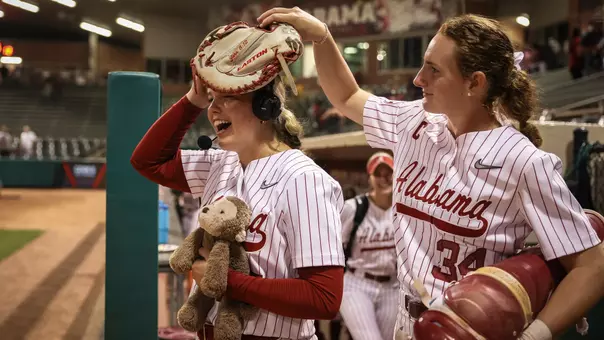
Braud is still very involved in SEC softball, but now from the media side as an in-game and studio analyst for the SEC Network.
"I majored in public relations so I was always interested in the media side of sports," Braud said. "However, if you would have asked me in college if I would have been in front of a camera on TV, I would have said absolutely not. Apparently when I played in the World Series I gave a good interview with ESPN and, since we kept winning, I kept doing interviews and we did a lot of on-camera spots. The producer at the time was just talking with me about her job and I thought it was really interesting. I graduated and had an internship with Nike back home in Oregon. It was fantastic but it wasn't really for me in that time and place, so I got a call from one of the SEC Network producers who asked if I was interested in commenting on softball games. They were looking for an SEC alum to call games and kind of wanted to get a face from our conference in. That's how it started."
Alabama fans will have to wait a little longer before they see Braud's familiar face in the booth however.
"That was a rule when I first came on," Braud said. "They said I'm not going to call an Alabama game for quite a while which is totally understandable. I still know people on the team. How can you not care about your old teammates? It's so hard to have an unbiased opinion so it would be really hard to call a game. As far as the other games go now with the other teams, I feel like it's easier to be objective. It took some practice but it's easier now. Calling an Alabama game and being objective would be difficult at this point!"