Remembering Roberta Alison: 40 Years Later
9/29/2003 12:00:00 AM | Women's Tennis
|
|

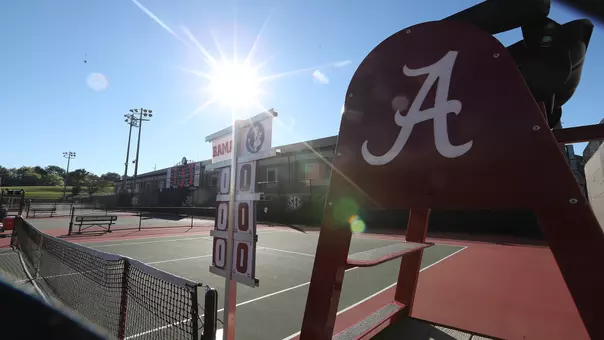
On the 40th anniversary of Roberta Alison’s barrier-breaking steps on behalf of female athletes, The University of Alabama honors one of its greatest champions with the Roberta Alison Fall Classic (Oct. 3-5). The flighted tournament, held each fall, is a showcase of tennis talent, annually bringing in several of the nation’s top tennis powers.
In the winter of 1963, the Southeastern Conference made an unprecedented decision to allow women to compete on its men’s varsity athletic teams. It was the first official move toward opening a door to women’s varsity athletics at the SEC’s member schools. It was a coach, Jason Morton, at the University of Alabama, who pushed toward the monumental decision.
Morton had found an ace in Roberta Alison, a player he’d discovered in Tuscaloosa where she was training for the U.S. Women’s Tennis Nationals. The Alexander City, Ala., native, traveled to Tuscaloosa for her training since it was the nearest source for a grass court facility. She would need that in her training because the nationals would be played on grass. It was there at a Tuscaloosa country club where Morton enticed Alison into becoming the first woman to play on a varsity men’s team at Alabama.
Alison’s story is fascinating, particularly when judging the strength of character she displayed at the age of 19. Not every opposing coach was as enthusiastic as Morton was about a female playing on a traditionally all-male squad. Matches were forfeited by opposing coaches who claimed it was insulting for their players to play a woman. Newspapers were constantly bringing up the dispute, and no doubt Alison felt pressure from within because of all the controversy. But Morton and Alison’s teammates stood by her, and she herself carried the entire affair with class and with some of the best tennis performances of that time, including becoming an SEC quarterfinalist. Once she joined the team, the curious flocked to Alabama’s home matches with attendance rising from an average of 50 in 1962 to 350-400 in 1963.
“I just go out there to win. I don’t care who I play, man or woman,” said Alison at the height of the controversy. “I don’t think men hold back because I’m a girl. If they did, it would be against the object of the game, which is to win. I certainly don’t want them to hold back just because it is me.”
Alison would letter for three seasons at Alabama on its men’s team, playing primarily at No. 4 as a sophomore and junior and between Nos. 1-2 as a senior. Among the titles she won during her playing days were the women’s collegiate singles champion in both 1962 and 1963. She teamed in doubles with Justina Bricka of Missouri for the 1963 women’s collegiate doubles national title in women’s doubles. Alison was a four-time Blue Gray and three-time Southern tournament champion.
She is a member of the Southern Lawn Tennis and the Southern Tennis Hall of Fame, and she was among those featured in the Women’s Collegiate Tennis Hall of Fame which stands in Williamsburg, Va., on the campus of William and Mary. In 1988, she joined All-American Gregg Hahn and All-SEC player Andy Solis as the inaugural inductees into the University of Alabama’s Tennis Hall of Fame.