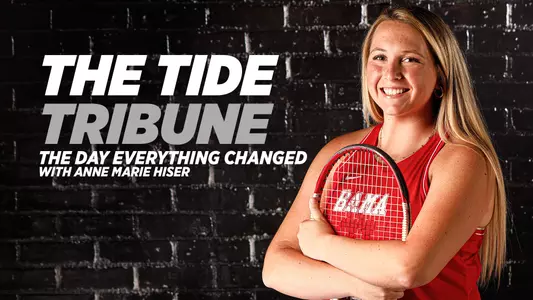
The Day Everything Changed
1/6/2022 2:58:00 PM | Women's Tennis
By: Anne Marie Hiser
I remember it like it was yesterday.
I was six years old and at my grandparents' house.
At the time, I was losing an insane amount of weight for my age, and I was constantly craving water and using the restroom.
My body was so weak.
I had no energy.
At first, my parents thought it might be a really bad cold or something, but during my trip, things got bad enough where my grandparents took me to the hospital.
My dad's a doctor, and I'll never forget him crying over the phone once he found out what the doctors at the hospital told me.
Everything was happening so fast, and I didn't quite understand what was going on. But if my dad was crying, I knew it had to be something serious.
Something was wrong.
That's when I learned my pancreas stopped working.
I'd been diagnosed with Type-1 diabetes.
Nothing would ever be the same again.
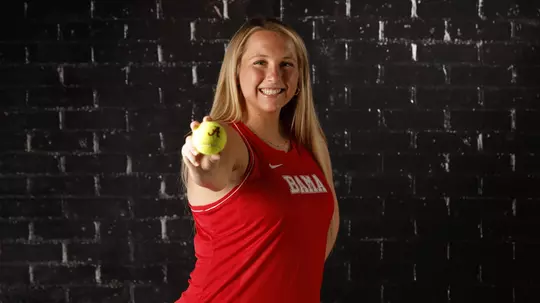
A new normal
My dad drove through the night to take me to a children's hospital in Atlanta, where I'd spend the next two weeks basically having my finger pricked every 15 minutes. It was a moment that all of us as a family — me, my dad, mom and brother — had to go through together.
For the first three years, I remember not even being allowed to spend the night anywhere. My mom actually had to go with me the first time I was allowed out just to make sure nothing went wrong.
So, there was a bit of a delay with me growing up and spending time with friends — you know, the normal things that kids do.
None of the other parents knew how to deal with this disease because none of their kids had it.
People were scared to even put a piece of cake in front of me at that point. You don't know what you don't know, and the thought of me having a serious medical event was always a consideration.
Today, I can eat whatever I want as long as I dose it with my insulin pump.
I'm very appreciative of everything that's been given to me by my doctors and the new technology that has come out.
Without those things, I don't know where any Type-1 diabetic would be right now.
I know I wouldn't be playing tennis.

The not so wondrous years
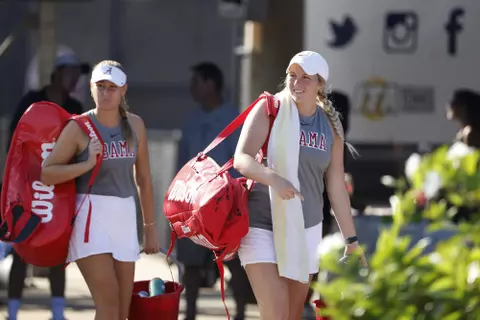
The ability to go out there and compete at a sport helped take my mind off everything else I was dealing with. I felt like a normal kid every time I stepped on the tennis court, and I genuinely loved everything about the sport.
Sure, I need to measure my blood sugar at every changeover and constantly be mindful of how I'm feeling, but tennis challenged me in ways that I needed to be challenged.
Most importantly, it also kept me out of my own head at times, too.
I'll be honest, the teenage years were the hardest for me because that's when you're growing up and figuring out who you are as a person. For me, especially as someone that attended a public school, it was really difficult.
I had this big, bulky insulin pump on me, and people would stare at me. I brushed those interactions off for the most part, but there was the occasional comment that would make me break down and cry.
I think a big issue is people not really understanding the difference between Type-1 and Type-2 diabetes. So, they might say or post things on social media without thinking they're going to hurt someone.
Even to this day, there are times when I wake up after barely sleeping the previous night because my blood sugar was too low.
Those are the moments when I'll just sit there and ask myself, "Why me?"
But then I'll start to feel guilty for complaining and crying because there are others out there going through things that are far worse than my situation.

A newfound purpose
That thought alone forced me to consider the positives of growing up with diabetes.
After the initial delay, I feel like I matured at a young age quickly, and it also made me appreciate the little things in life people often take for granted, you know?
It helped me find who I am as a person—who I want to be and what I want to do with my life.
I'm very fortunate to have access to insulin pumps, sensors and other technology. But not everyone does.
I want those people to realize that they can compete at the highest level and live a happy and fulfilling life. Because of everything I went through, I really want to positively impact those people's lives — it drives me. Constantly.
At the end of the day, I want them to understand that we just have one more thing to worry about that others don't.

No giving up
Being a Type-1 diabetic has put a few roadblocks in the way, but I refuse to let my disease define me.
I'm praying every single day that there'll be a cure eventually, but for right now, I have to push through it.
And I want to do whatever I can to support others going through similar experiences.
I'd love to host a clinic soon, for example, and donate all of the money to the Juvenile Diabetes Research Foundation.
As a kid, I would have loved if a college tennis player had put on something like that. It would have been so cool to meet with them and share my story and experiences — just talk about the things we have in common as far as this disease is concerned.
I never want any athlete to give up on their dream because diabetes got in the way of it. I want to tell other Type-1 diabetics to never give up.
There are bad days, but if you hold on, the good days are coming, too.
You can get through this because I believe in you.
If I believe in you, then you should believe in you.
And if you do that, ANYTHING is possible.








Players Mentioned