Sweden Duo Finds Home on Alabama Campus
2/28/2008 12:00:00 AM | Women's Golf
By Scott Latta
UA Media Relations
Mic Potter's newest commitment had just arrived on the Alabama campus. Like all freshmen, there would be a learning curve to the college game ?? an adjustment to campus life while she got used to the changes of living a college student's life.
There was just one wrinkle: the commitment was Helena Blomberg, a native of Uppsala, Sweden, and the moment she set foot on the Alabama campus was her first time outside of her home country.
It was also the first time Mic Potter had ever seen her in person.
How They're Here
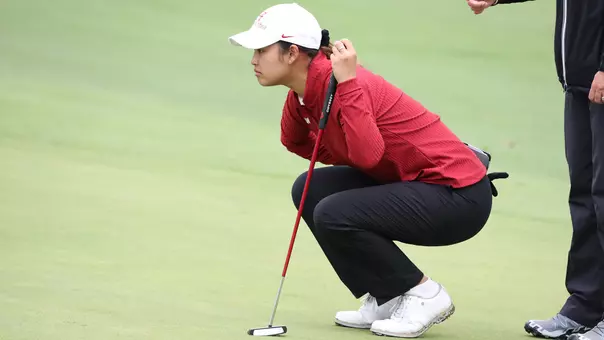
Blomberg, now a sophomore, is one of two Swedes on the Alabama women's golf team and one of three in the last three years. Her stats from Europe hold up against some of the top talent the U.S. has produced in the last few years: she was the back-to-back Swedish national champion before coming to Alabama and won titles in the Junior and Senior National competition as well as the Ben Hogan Cup in 2004 and 2005.
But her journey to Alabama is a little more complicated??facing a recruiting crunch after being hired by the university just months before National Signing Day for the sport, Potter had his back to the wall in the recruiting game and was, after seeing Blomberg's film, willing to give her a further look. Academically, she was fine, and her film checked out and looked promising. She wanted an opportunity to play golf in college, which meant coming to the United States, so she e-mailed the Alabama coach.
He offered a scholarship, and Blomberg accepted.
"She just seemed like a pretty solid girl and she came to visit and I really liked her," Potter said. "She was very unassuming but you can tell she was a hard worker and was dedicated and practical. It was a little bit of a risk but an educated one at least.
"I hadn't seen her play when she walked on campus."
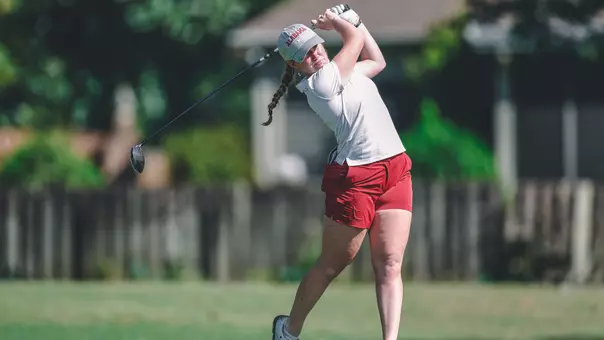
And, like it often happens in other collegiate sports, it didn't take long for Blomberg's commitment to pay off in ways other than on the golf course. One year later, after watching her play in a tournament in Tennessee, Potter offered a scholarship to another native of Sweden, Camilla Lennarth, a member of the Swedish Junior National team.
Having a girl on the team who was from just 40 minutes away from Lennarth's home town gave Alabama a decided recruiting advantage over Lennarth's other suitors, Oklahoma State and Georgia.
"That was one of the reasons I picked this school, because I thought it would help me in school," Lennarth said. "Helena would start her second year and would know how things are going here and what to do and what Mic expects, so it's helpful. It had an impact, definitely."
How They Impact
Together, Blomberg and Lennarth are a duo looking to help lead the resurrection of the Tide women's golf program, and early indications show that their games, at least, are enough to do just that. As a freshman, Blomberg was the second-best player on Alabama's team, averaging 76 strokes-per-round in all 11 of the Tide's events.
More importantly, she seemed to get better both as the season wore on as well as into her sophomore campaign. She took two strokes off her average score from her first fall to her first spring and had the lowest finish of any freshman in the SEC at the SEC Championships.
For Lennarth, who has come on in her freshman year to be one of Alabama's top contributors, committing to play at Alabama did a lot more for the team than just add some of Europe's top talent??it sent a message throughout collegiate golf that Alabama was now a major player for the top players in the world.
"The great thing about both of them is that they're so pragmatic," Potter said. "They know what the goal is. You give them the information and they work hard on it. There are no diversions, they just get it done. Helena is definitely one of the elite college players now. Camilla, number one, we beat Georgia and Oklahoma State and we're a program that was never getting those players, and it made a statement about what we're doing and what we have the capability of doing."
??I might turn into a hamburger'
There are a number of reasons each player chose to attend Alabama to play college golf, though two of the top reasons should come as no surprise: on each girl's first visit to the Alabama campus, two things stuck out??the weather, and the people.
"People are always nice and helpful, and in Sweden we're more reserved and don't feel like taking care of people that much," Lennarth said. "Everyone's just more friendly here."
Blomberg, an economics major, said the temperate southern climate had much to do with her decision.
"I chose Alabama because in Sweden, right now, it's snowing and it's freezing," she said. "The weather is so much better. You can play golf all year round, and everyone is so friendly. Everyone's like, ??Americans, they're so friendly,' but they really are."
For both girls, adjusting to life in the U.S. has had its challenges. First, there is the driving??in Sweden, you walk or take public transportation to get around, and not everyone even has a car. Here, driving is paramount, and each girl has had to learn to use it daily. ("I've gotten kind of lazy," Lennarth says. "My parents would freak out if they knew I was driving two blocks.")
Then there is the food. A good meal in Sweden is usually cooked at home or enjoyed in a formal restaurant. Outside of McDonald's, it takes a while to eat out. Here, there is the opportunity to get Mexican, Chinese, Italian or Japanese food within miles of each other, and it only takes minutes.
And while there are hamburgers in Europe, Lennarth says, there are not hamburgers like the ones here.
"I might turn in to a hamburger if I keep eating them," she said.
But getting used to living halfway across the world has had its challenges beyond those of traffic or restaurants ?? there was also the adjustments of rarely getting to see family from home (mostly Christmas and summer in addition to their rare trips to the U.S.) as well as living on a campus with 23,000 other students, and learning the American college terminology.
Thankfully, for Blomberg, who was here one year before Lennarth, she had a little help in the form of someone who had been there before and could walk her through the process. Former Alabama golfer Carina Sorenson, also a native of Sweden, was an invaluable resource during Blomberg's first year.
"That was really nice," Blomberg said. "As soon as I didn't know what to do, I'd go, ??Carina, what should I do? Where do I go?'"
Coach Potter said if it weren't for Sorenson, it's unlikely Alabama would have gotten either girl to play for the Tide.
"I don't know if Helena would have come here if we didn't have Carina on the team before her," he said. "I think it's good for them to have one."
Staying Over
For each girl, coming to the U.S. is more than an opportunity to play college golf; it represents a chance to make a name globally in the sport. It's a chance that is largely absent on the European golf tours.
After all, one of the most successful women's golfers in history, Annika Sorenstam, is a Swede herself, as well as the winner of 70 professional tournaments and 10 women's majors. Her career began largely in the same way, too: she turned professional after two years of playing college golf at Arizona after first making the leap across the Atlantic into the NCAA.
Sorenstam, Potter said, is partially responsible for the influx of European players now looking for a home in U.S. college golf. They see her and they see success, but more importantly, they see success that hits close to home.
"I think for them, Annika Sorenstam is the biggest factor in helping them to set their goals," Potter said. "She turned pro after two years at Arizona, and there are a great many Swedes being successful on the LPGA tour. I think it's as recent as the Swedish Federation's commitment to developing great players."
Perhaps it shouldn't come as a surprise, then, that each girl plans on staying in the U.S. if possible after college.
"I don't want to go back to Europe," Blomberg says, "because if you want to be a golf professional it's here where you want to be. It's here where you can make the big bucks."
But, as the U.S. quickly rubs off on each of the girls, a little bit of Sweden has, in return, found its way to the rest of Alabama golf team. Thanks to the pair, the rest of the team now knows certain phrases in Swedish. On the course, it's not uncommon to hear the two, when upset, shout in their native language.
And there are those who look at them in public, who hear them speaking an unfamiliar language while shopping together or getting something to eat, and wonder how they found their way here, thousands of miles from home. It makes them stick out a little, they say, but they are used to it.
It's what, in the end, makes them most comfortable: when they're together, they are a connection to each other back to home, back to halfway around the world, and there is never any doubt which language it comes down to, at least for Camilla Lennarth.
"I go Swedish," she says.