Community Outreach
5/3/2002 12:00:00 AM | Women's Tennis
Community Outreach
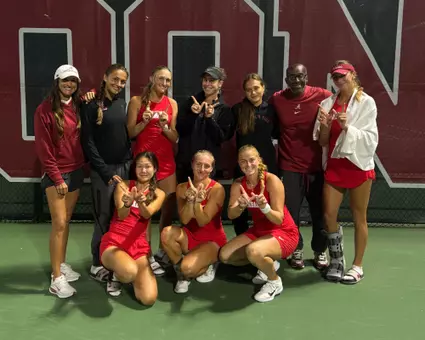
From the teams' visits to the RISE Program to its involvement in Project ngeltree, which helps children whose parents are incarcerated through the Christmas season, the Alabama Women's Tennis Team is out to make a difference in the Tuscaloosa community.
In an effort to enhance the athletic and personal responsibility of student-athletes at the University of Alabama, Kevin Almond, director of the center for academic and student services, has implemented a plan that will not only help further educate student-athletes, but also help them uncover what life has to offer them.
With the combination of the programs developed by partners of the National Collegiate Athletic Association, as well as individual institutions, student-athletes now have an excellent program in which to further their education.
"Among all of intercollegiate athletics' responsibilities, there is none more important than providing the tools for the total development of the student-athlete," said Cedric W. Dempsey,executive director of the NCAA. "The NCAA is committed to providing the technical assistance needed to develop successful campus programs. The commitment is further demonstrated by the partnership between the NCAA and the Division 1A Athletic Directors' Association."
The CHAMPS program was created by the Division 1A Athletic Directors' Association to initiate a framework for operating successful athletics programs. Based on the mission of the Association to "prepare student-athletes for life as productive citizens in our society," the association, as well as Almond, believes the program will enable athletic programs to prepare this generation of student-athletes to face "real life" with greater skill than ever before."
In 1995, the Division 1A Directors' CHAMPS program and the NCAA Life Skills program joined forces to become the CHAMPS/Life Skills program. With the NCAA providing the educational programming, resources and training, and Division 1A Directors providing marketing, leadership and funding assistance, the program is now in place to enhance the total development of students participating in intercollegiate athletics.
CHAMPS, an acronym for Challenging Athletes' Minds for Personal Success, consists of five components - athletic commitment, academic commitment, career development, personal development and community service - and was implemented into the athletic department by Almond.
"This program focuses on service, personal development and career counseling," said Almond of the program. "Obviously,the University of Alabama is committed to athletics, but we also fulfill the academic component of the student athlete."
To fulfill the component of personal development in the CHAMPS program, the athletic department sponsored several programs for student-athletes this past spring including programs on date rape, campus security, gambling, fraud and issues relating to public safety. The department also sponsored guest speakers such as the United States Secret Service, former NFL stars Gene Washington and Billy Bride.
"This past spring semester, we really tried to emphasize personal development," Almond said. "The athletes knew that the programs were there for them and for them to utilize."
Alabama student-athletes have also taken part in many community service programs aimed at "providing more visibility to University of Alabama student-athletes."
Said Almond, "Most coaches encourage community involvement. In the past we have taken a major part in the Angel Tree project, the Salvation Army's 'Stuff a Stocking,' and they also have raised money during Homelessness Week. They have been pretty involved in all of those programs."
This past spring, many of the University of Alabama athletes could be seen across campus, as well as across the city of Tuscaloosa, volunteering in order to help the community. From the women's tennis team volunteering at the RISE Program to members of the volleyball team volunteering at area hospitals, Almond feels that the athletic involvement in the community is helping both the city and the student-athlete themselves.
"It helps the student-athlete see their responsibility to the community," Almond said. "It helps them see that they are a role model to youngsters in whatever they do. I feel that this is an important part of their education."